Best Blood Pressure Monitors, Watches and Apps of 2026
The Omron 10 Series is the best blood pressure monitor of 2026, with AFib screening on every reading. See which watches are FDA-cleared and which only estimate.
The verdict
The Omron 10 Series wins because it is a validated upper-arm cuff that also screens for atrial fibrillation during each reading, a feature the FDA authorized through De Novo in 2024. The Apple Watch Series 12 is the finalist for FDA-cleared hypertension alerts that do not measure blood pressure, and the Withings BPM Vision is the finalist for guided, Wi-Fi-connected home readings.
| Award | Product | Best for |
|---|---|---|
| Winner | 10 Series Upper Arm Blood Pressure Monitor (BP7465) Omron Healthcare | Home readings with built-in AFib screening every time |
| Finalist | Apple Watch Series 12 | Passive hypertension alerts for iPhone owners without a diagnosis |
| Finalist | BPM Vision Withings | Households that want on-screen coaching and Wi-Fi sync |
| Commended | Complete Wireless Upper Arm Blood Pressure Monitor + EKG (BP7900) Omron Healthcare | People with AFib who want blood pressure and EKG |
| Commended | Galaxy Watch blood pressure monitoring Samsung | Galaxy phone owners curious about wellness blood pressure estimates |
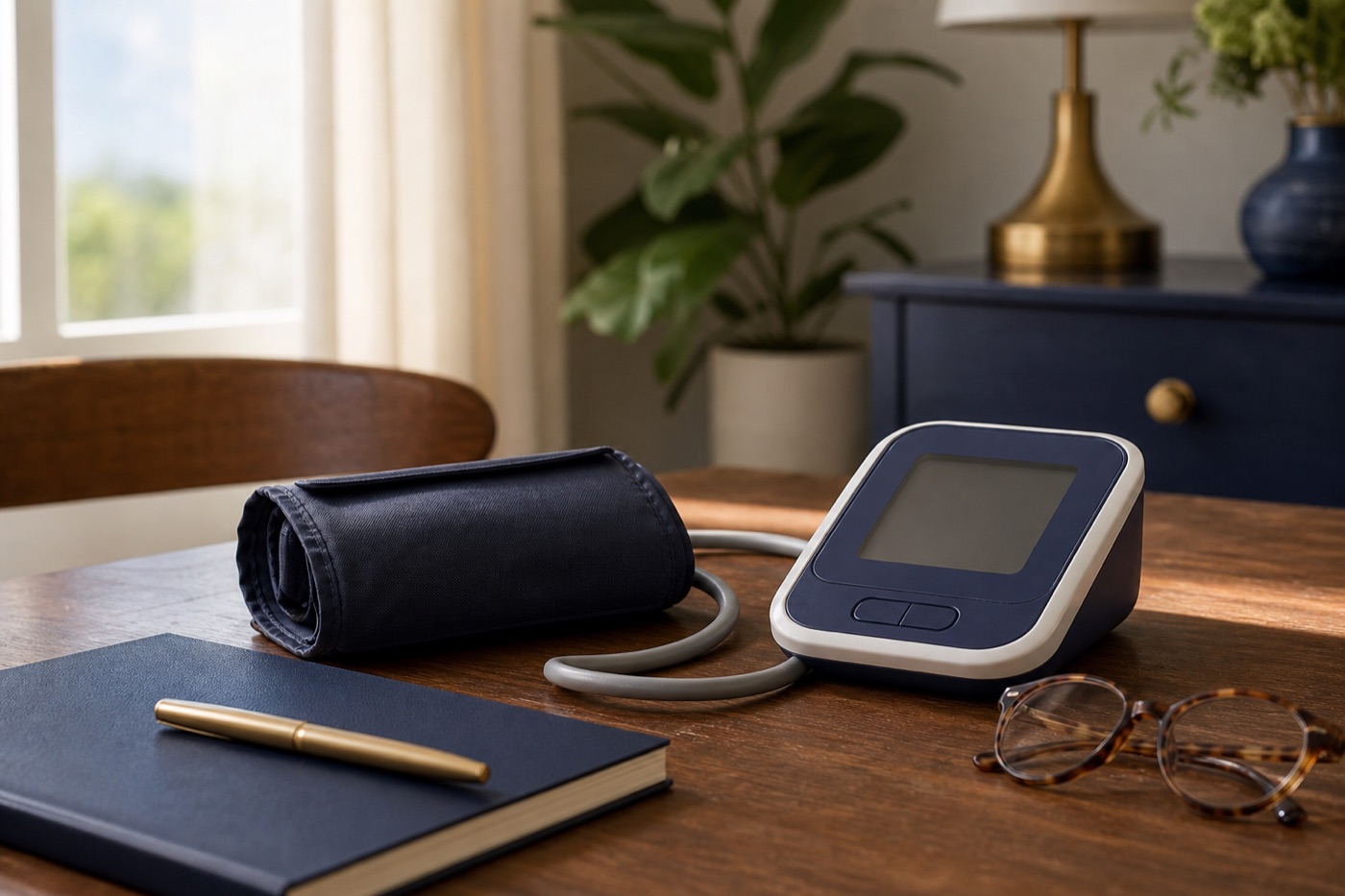
The best blood pressure monitor of 2026 is the Omron 10 Series (BP7465), an upper-arm cuff that measures blood pressure and screens for atrial fibrillation in the same reading. The Apple Watch Series 12, with its FDA-cleared hypertension notifications, and the Withings BPM Vision are the finalists. Two more products are commended, including Samsung’s watch-based estimates, which reached US users this year as a wellness feature.
How this category was judged
Blood pressure is where the gap between a medical device and a wellness gadget matters most, so regulatory status was checked product by product against FDA records and maker statements. A device that measures blood pressure and is cleared or authorized for that use scored highest on published evidence. A feature cleared only to send an alert was credited for that narrower claim and nothing more. Estimates sold as wellness information were judged on what their makers say they are for.
Everyday usefulness meant fewer bad readings: guided technique, automatic averaging and easy sharing with a doctor. Access weighed free apps, phone requirements and subscriptions. All five factors are spelled out on the program’s judging criteria.
Winner: Omron 10 Series Upper Arm Blood Pressure Monitor (BP7465)
Omron’s top home cuff earns the prize by doing two jobs in one inflation. Every blood pressure measurement on the 10 Series also screens for AFib, an irregular heart rhythm that raises stroke risk, and Omron says a single measurement is enough for that screen. The monitor shows a weekly average of possible AFib events, and if one is flagged it suppresses the side-by-side comparison with your previous reading.
The regulatory footing is solid. The FDA granted Omron a De Novo authorization in October 2024 for blood pressure monitors with this AFib detection feature, creating a new device category for oscillometric, over-the-counter AFib notification. Omron reports that in a multicenter US study of 559 people, its monitors with the technology showed 95% sensitivity and 98% specificity for AFib against a 12-lead ECG read by a blinded cardiologist. The FDA’s order is careful about scope: the screen is meant for home detection of possible AFib, not for managing people already diagnosed, and a reading without a flag does not rule the condition out.
The blood pressure side is equally well thought out for home use. TruRead takes three consecutive readings at an interval you choose, from 15 seconds to two minutes, and displays the average, which matches the multiple-reading habit that home monitoring depends on. The pre-formed ComFit cuff inflates 360 degrees around arms from 9 to 17 inches. The monitor stores 200 readings for two users, has a guest mode, and runs on AA batteries or the included AC adapter, so it works without a phone.
If you do want a phone in the loop, the free OMRON connect app for iOS and Android stores unlimited readings, charts trends and lets you share results with family or a doctor.
Who should skip it: Omron says the 10 Series is not intended for people with an implanted pacemaker or defibrillator, for use during pregnancy, or for anyone under 22. People with arms larger than 17 inches will need a different cuff, and anyone who wants Wi-Fi syncing should look at the Withings finalist.
Finalist: Apple Watch Series 12
Be clear about what Apple’s feature is: it is a hypertension notification, not a blood pressure reading. The watch does not measure or display your blood pressure. Instead, the optical heart sensor analyzes how blood vessels respond to each heartbeat over 30-day periods and alerts you if it sees a consistent pattern of hypertension. The FDA cleared that feature through a 510(k) in September 2025, and it runs on Series 9 and later as well as the Series 12.
The FDA summary is unusually candid about performance. In a study that enrolled 2,229 adults without a hypertension diagnosis, the feature caught 41.2% of people with hypertension overall and 53.7% of those with stage 2, while its specificity was 92.3%. In other words, an alert is meaningful, but silence proves little, and the FDA labeling says so.
It is cleared only for adults 22 and older who have not already been diagnosed, and not for use during pregnancy. It works only with an iPhone. For someone who has never checked their blood pressure, it is a useful background nudge to start; for someone already diagnosed, the feature is not intended at all, and a cuff remains the tool.
Finalist: Withings BPM Vision
The BPM Vision tackles a common home monitoring problem, poor technique, with a 2.8-inch color screen that walks you through each step before the cuff inflates. Withings says the monitor is FDA cleared. Its TripleTrust mode takes three consecutive readings, results are color-coded on screen, and Wi-Fi sync sends them to the Withings app without your phone nearby. Interchangeable cuffs cover arms from 9 to 20 inches, the widest range on this page, and the device tracks up to eight users, which suits a shared household.
It finished behind Omron because Withings’ US announcement describes no AFib screening, and because Omron’s published study data are more detailed than the 91-person validation trial Withings cites.
Commended: Omron Complete (BP7900)
Complete pairs an upper-arm cuff with a single-lead EKG developed with AliveCor, and the FDA cleared it through a 510(k) in 2019. You can take a blood pressure reading and an EKG at the same time, and the EKG can flag atrial fibrillation, slow or fast heart rates, or a normal rhythm. The EKG only works when the monitor is paired with the OMRON connect app. It is an older design, but Omron pitches it at people living with AFib who want to keep track of their condition, and for them it remains a strong single-device option.
Commended: Samsung Galaxy Watch blood pressure monitoring
Samsung began a phased US rollout of watch-based blood pressure readings on March 31, 2026, for Galaxy Watch4 and later models paired with a Samsung Galaxy phone. You calibrate the watch against a separate upper-arm cuff, and Samsung requires a fresh calibration every 28 days. Samsung says the feature is not intended to diagnose high blood pressure, and it told Android Authority that the feature is designed for wellness and is not subject to FDA clearance. On the Galaxy Watch9, Samsung’s US page describes a morning estimate generated after you wear the watch to sleep, and the March announcement promised passive monitoring of blood pressure trends later in 2026. Treat the numbers as trend information between cuff readings, not as a substitute for them.
Measuring, alerting or estimating: the 2026 field
| Product | What it does | FDA status, per FDA or maker | Phone needed |
|---|---|---|---|
| Omron 10 Series | Measures BP; screens for AFib | AFib feature granted De Novo, 2024 | No (app optional) |
| Apple Watch Series 12 | Hypertension alert; no readings | Hypertension notification 510(k) cleared, 2025 | iPhone |
| Withings BPM Vision | Measures BP with guided technique | FDA cleared, per Withings | No (Wi-Fi sync) |
| Omron Complete | Measures BP plus single-lead EKG | 510(k) cleared, 2019 | Yes, for EKG |
| Samsung Galaxy Watch | Calibrated BP estimates | Wellness feature, not FDA cleared, per Samsung | Samsung Galaxy phone |
Choosing for your situation
- You need reliable numbers for your doctor: Omron 10 Series or Withings BPM Vision.
- You worry about undiagnosed AFib: Omron 10 Series, whose screen the FDA authorized for home screening for possible AFib.
- You already have AFib: Omron Complete, so you can record an EKG trace to share with your cardiologist.
- Several people in your home will use one monitor: Withings BPM Vision.
- You wear an Apple Watch and have never been told you have hypertension: turn on hypertension notifications, then confirm any alert with a cuff.
- You own a Galaxy phone and watch: try Samsung’s estimates for trends, but keep the cuff.
Before you buy
A home cuff only helps if you use it the same way every time and bring the results to your clinician; none of these products diagnoses hypertension on its own. Omron’s 10 Series wins 2026 because it measures well, adds a regulated AFib screen and does not need a phone to do either. For the year ahead, our 2027 blood pressure picks look at how the new wave of cuffless wearables fits around a cuff like this one.
2026 badges in this category
Winners and finalists may show their badge for free. It must link back to this page and not be altered. Badge rules.
10 Series Upper Arm Blood Pressure Monitor (BP7465)
Winner, Blood Pressure Monitors 2026
Embed code
<a href="https://innovationprizes.org/2026/best-blood-pressure-monitors/"><img src="https://innovationprizes.org/badges/2026-best-blood-pressure-monitors-winner.svg" alt="Innovation Prizes 2026 Winner: Blood Pressure Monitors" width="160" height="160"></a>
Apple Watch Series 12
Finalist, Blood Pressure Monitors 2026
Embed code
<a href="https://innovationprizes.org/2026/best-blood-pressure-monitors/"><img src="https://innovationprizes.org/badges/2026-best-blood-pressure-monitors-finalist.svg" alt="Innovation Prizes 2026 Finalist: Blood Pressure Monitors" width="160" height="160"></a>
BPM Vision
Finalist, Blood Pressure Monitors 2026
Embed code
<a href="https://innovationprizes.org/2026/best-blood-pressure-monitors/"><img src="https://innovationprizes.org/badges/2026-best-blood-pressure-monitors-finalist.svg" alt="Innovation Prizes 2026 Finalist: Blood Pressure Monitors" width="160" height="160"></a>
Questions people ask
Is a smartwatch accurate enough to replace a blood pressure cuff?
Not today. Apple's watch sends a hypertension alert but shows no readings at all, and Samsung's estimates must be recalibrated against a cuff every 28 days and are labeled as wellness information. An upper-arm cuff is still the device the other products on this page lean on.
What does FDA-cleared mean for a home blood pressure product?
It means the FDA reviewed the specific feature or device and allowed it to be marketed for a stated medical use, through a 510(k) clearance or a De Novo authorization. Wellness features such as Samsung's estimates have not gone through that review, which is why their labels say they are not for diagnosis.
When should I call a doctor about my readings?
Share your log with your doctor at your next visit, and call sooner if readings stay high or a device flags possible AFib or hypertension. Very high readings with chest pain, shortness of breath, weakness or vision changes need emergency care.
Sources
- U.S. FDA: De Novo decision summary DEN230076, Omron blood pressure monitor with AFib detection
- U.S. FDA: 510(k) summary K250507, Apple Hypertension Notification Feature
- Withings: BPM Vision US availability press release (April 2025)
- Samsung Newsroom: Blood pressure monitoring feature now available to U.S. users (March 2026)
- Omron Healthcare: AFib detection technology for professionals
Prize pages are written and reviewed by the Innovation Prizes editors from what each maker publishes, FDA records and published research. Nobody pays to enter or to win. About the prizes.