Best Fitness Trackers for 2027
Apple Watch Series 12 is our pick for the best fitness tracker to buy for 2027. Fitbit Edge and Garmin Venu 4 are the finalists for anyone not on an iPhone.
The verdict
Apple Watch Series 12 is the tracker to buy for the year ahead: new heart sensors, a daily Readiness score and the widest set of FDA-cleared features, with the caveat that it only works with iPhone. Google's brand-new Fitbit Edge is the finalist for people on either phone platform, and Garmin Venu 4 is the finalist for anyone who wants close to two weeks between charges.
| Award | Product | Best for |
|---|---|---|
| Winner | Apple Watch Series 12 | iPhone owners buying one watch for the long haul |
| Finalist | Google Fitbit Edge | A screen, GPS and ECG on any phone |
| Finalist | Garmin Venu 4 | Smartwatch features with up to twelve days per charge |
| Commended | Google Pixel Watch 5 | Android owners who want Gemini and safety tools |
| Commended | Garmin CIRQA Smart Band | Screen-free tracking with nothing left to pay |
| Commended | Samsung Galaxy Watch9 | Galaxy users who want overnight vitals baselines |
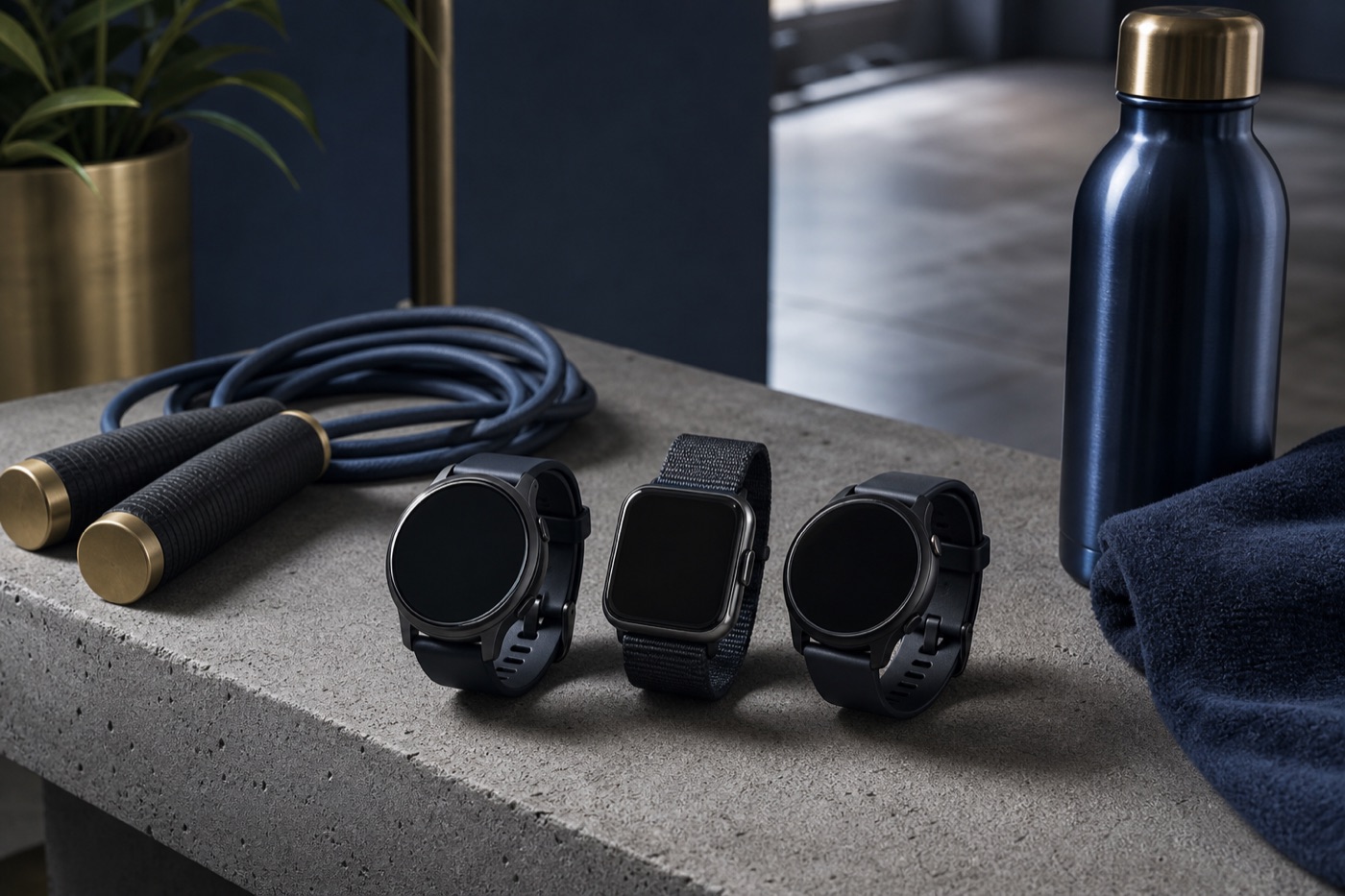
If you are buying a fitness tracker to wear through 2027 and you carry an iPhone, get the Apple Watch Series 12; it is our overall winner for the year ahead. If you use Android, or might switch, Google’s new Fitbit Edge is the strongest finalist, and Garmin’s Venu 4 is the other finalist for people who would rather charge twice a month than every night.
How this edition looks ahead
The 2027 awards are announced in October, the way model-year awards are, so the field is limited to devices you can buy today or that carry an official release date. Rumored hardware and leaked specs were ignored. Scoring follows the five weighted measures explained on the criteria page, and for a forward-looking pick two of them get extra attention: whether a device’s health claims rest on published evidence or FDA decisions, and whether it will still be useful after the novelty wears off. Nothing here comes from personal use; the assessments rely on maker documentation, FDA records and established news reporting.
What changed during 2026
Three shifts shape what to buy next. First, Google renamed the Fitbit app Google Health, turned Fitbit Premium into Google Health Premium with an AI coach inside, and filled out its lineup from the screen-free Air to the Pixel Watch 5. Second, regulators drew the wellness line more clearly: the FDA updated its general wellness guidance in January 2026 and in June closed its warning-letter dispute with WHOOP over a modified blood pressure feature. Third, Apple and Google both moved toward daily readiness scores and long-term trend reports, so the question is no longer which device counts steps best but which one turns months of data into advice you can trust.
Winner: Apple Watch Series 12
Series 12 went on sale September 18, and its upgrades sit in the hardware where software updates cannot reach. Apple’s Health Sensing System is a fresh set of optical and electrical heart sensors driven by the S11 chip; it takes a pulse reading every five seconds through the day and checks heart rate variability far more often, up to 24 times by Apple’s count. In a study of more than 1,000 participants run by Apple, the company says it produced the most accurate heart rate sensing of the wearables compared. Readiness, a single daily number built from your recent workload, overnight vitals and sleep, turns that data into a plain recommendation each morning.
The regulated side is what makes it a safe long-term buy. Hypertension notifications, cleared by the FDA in September 2025, look for patterns over 30-day windows, and the watch also carries Apple’s sleep apnea alerts, its ECG app and its irregular rhythm alerts. Apple’s redesigned Health app, arriving later in 2026 in US English first, adds a Longevity tab with a Health Age estimate that requires an Apple Watch.
Who should upgrade: owners of a Series 8 or older, because watchOS 27 only runs on Series 9 and later. Owners of a Series 9, 10 or 11 already get watchOS 27 and hypertension notifications, so the reasons to move up are the new sensors, outdoor workout battery that Apple says is 25 percent longer at up to 10 hours, and a 15-minute charge that adds up to 12 hours. Pass on it if you use Android, since Apple’s requirements call for an iPhone, or if you want multi-day battery, since Apple’s everyday figure is up to 24 hours.
Finalist: Google Fitbit Edge
Google announced the Edge on October 12, and it reached stores on October 27, which makes it the newest device here. It keeps a band shape but adds what the screen-free Air leaves out: a bright Hybrid OLED display, a tactile button, built-in GPS that Google says is up to 40 percent more accurate than its earlier trackers, and an altimeter. Google lists an on-wrist ECG app, a dedicated skin temperature sensor, overnight HRV feeding a morning recovery score, and automatic recognition of up to 100 workout types.
Two details point toward the long term. Google calls the Edge its first repairable fitness tracker, with a modular interior and a replaceable battery, and quotes battery life of up to seven days. It pairs with Android 11 or later and iOS 16.4 or later. The caution is that Health Guardian, the monthly blood pressure and insulin resistance trend reports rolling out to the Edge this month, requires Google Health Premium, and Google says those trends are wellness information, not screening tools. Because it has been on sale for days, there is no long-term reporting on it yet. If you specifically want no display at all, our 2026 winner, the screen-free Fitbit Air, is still sold.
Finalist: Garmin Venu 4
Garmin’s health smartwatch arrived in September 2025 and remains the best pick for battery life with a full display: Garmin rates it at up to 12 days in smartwatch mode. It includes an ECG app that Garmin says can detect atrial fibrillation or normal sinus rhythm in adults 22 and older, plus a Health Status feature, still labeled beta, that flags when overnight heart rate, HRV, respiration, skin temperature or Pulse Ox drift from your usual range. Lifestyle logging lets you mark habits such as caffeine or alcohol and see how they track against sleep, stress and HRV.
Practical extras include an LED flashlight, a speaker and microphone for calls through a paired iPhone or Android phone, and voice commands that work without the phone. Skip it if you want a light, slim band, or if beta labels make you uneasy.
Commended: Google Pixel Watch 5
For Android owners, the Pixel Watch 5 brings Gemini to the wrist and Google’s most complete safety tools, including FDA-cleared Loss of Pulse Detection. Google says sleep stage detection is 15 percent more accurate, and Smart Wake times your alarm to lighter sleep. Its Breathing Emergency Detection is not FDA-cleared and launches first in selected European markets.
Commended: Garmin CIRQA Smart Band
CIRQA is for people who want to stop paying for tracking altogether. Garmin requires no subscription, rates the battery at up to 10 days, and lets you wear the fabric strap on the wrist or upper arm. It suits sleep and recovery tracking more than live training, since there is no screen.
Commended: Samsung Galaxy Watch9
Galaxy owners get a Vitals feature that learns your overnight baseline over at least seven nights and alerts you to large deviations, plus a Fitness Index built from body composition and VO2 max readings. Samsung cites FDA clearance for its sleep apnea feature, which needs a Galaxy phone. The watch requires Android 13 or later.
Comparing the 2027 picks
| Product | Award | Phones | Battery (maker’s figure) | On-wrist ECG | On sale since |
|---|---|---|---|---|---|
| Apple Watch Series 12 | Winner | iPhone | Up to 24 hours | Yes | September 2026 |
| Google Fitbit Edge | Finalist | Android, iPhone | Up to 7 days | Yes, select countries | October 2026 |
| Garmin Venu 4 | Finalist | iPhone, Android | Up to 12 days | Yes, select regions | September 2025 |
| Google Pixel Watch 5 | Commended | Android | Up to 40 hours | Yes | August 2026 |
| Garmin CIRQA Smart Band | Commended | iPhone, Android | Up to 10 days | Not listed by Garmin | July 2026 |
| Samsung Galaxy Watch9 | Commended | Android 13+ | Not given in hours | Electrical heart sensor in spec sheet | August 2026 |
Should you upgrade?
- Apple Watch Series 8 or older: yes, Series 12 is the clear move, since your watch cannot run watchOS 27.
- Apple Watch Series 9 to 11: only if the new sensors and longer workout battery matter to you.
- Fitbit Charge or Inspire band: look at the Edge for a screen and GPS, or the Air if you never read the display anyway.
- Older Garmin watch with short battery life: Venu 4 adds ECG and a flashlight while stretching time between charges.
- Paying for a tracker membership you rarely open: CIRQA covers sleep, stress and recovery with no plan.
People who mostly train with an app rather than a wearable will find more in our workout app awards for 2027, and finger-worn options are in the best smart rings for 2027.
Our read on 2027
The safest purchase for the coming year is the device whose health features rest on FDA decisions and published studies rather than on promises, and for iPhone users that is Series 12. Android users have their best year in a long time, with the Fitbit Edge as a cross-platform option that is easy to repair and a Pixel Watch built around safety. Whatever you choose, treat any alert about blood pressure, heart rhythm or breathing during sleep as a reason to see your doctor rather than as a diagnosis.
2027 badges in this category
Winners and finalists may show their badge for free. It must link back to this page and not be altered. Badge rules.
Apple Watch Series 12
Winner, Fitness Trackers 2027
Embed code
<a href="https://innovationprizes.org/2027/best-fitness-trackers/"><img src="https://innovationprizes.org/badges/2027-best-fitness-trackers-winner.svg" alt="Innovation Prizes 2027 Winner: Fitness Trackers" width="160" height="160"></a>
Google Fitbit Edge
Finalist, Fitness Trackers 2027
Embed code
<a href="https://innovationprizes.org/2027/best-fitness-trackers/"><img src="https://innovationprizes.org/badges/2027-best-fitness-trackers-finalist.svg" alt="Innovation Prizes 2027 Finalist: Fitness Trackers" width="160" height="160"></a>
Garmin Venu 4
Finalist, Fitness Trackers 2027
Embed code
<a href="https://innovationprizes.org/2027/best-fitness-trackers/"><img src="https://innovationprizes.org/badges/2027-best-fitness-trackers-finalist.svg" alt="Innovation Prizes 2027 Finalist: Fitness Trackers" width="160" height="160"></a>
Questions people ask
Is the Fitbit Edge the successor to the Charge 6?
Launch coverage, including Tech Advisor's, framed it that way, and Google positions the Edge between the screen-free Fitbit Air and the Pixel Watch 5. It adds built-in GPS, an altimeter and a replaceable battery to the familiar band shape.
Should I hold off for a newer Apple Watch?
No newer model had been announced when this edition went live, and this edition only weighs products that are on sale or officially dated. If you already own a Series 9 or later, most of this year's software already reached your watch, so the case for buying is strongest for owners of older models.
Can a watch's blood pressure trends replace a cuff?
No. Google calls its blood pressure trends a general wellness feature and says they are not a hypertension screener, and clinical groups still treat an arm cuff as the standard for diagnosis. Apple's hypertension notifications are FDA-cleared, but they flag a pattern for follow-up rather than reporting a reading.
Which of these picks work without paying for a plan?
Garmin says CIRQA needs no subscription. The Fitbit Edge comes with three months of Google Health Premium, which is optional and adds the Google Health Coach and Health Guardian reports; Garmin Venu 4 owners use the Garmin Connect app.
Sources
Prize pages are written and reviewed by the Innovation Prizes editors from what each maker publishes, FDA records and published research. Nobody pays to enter or to win. About the prizes.